
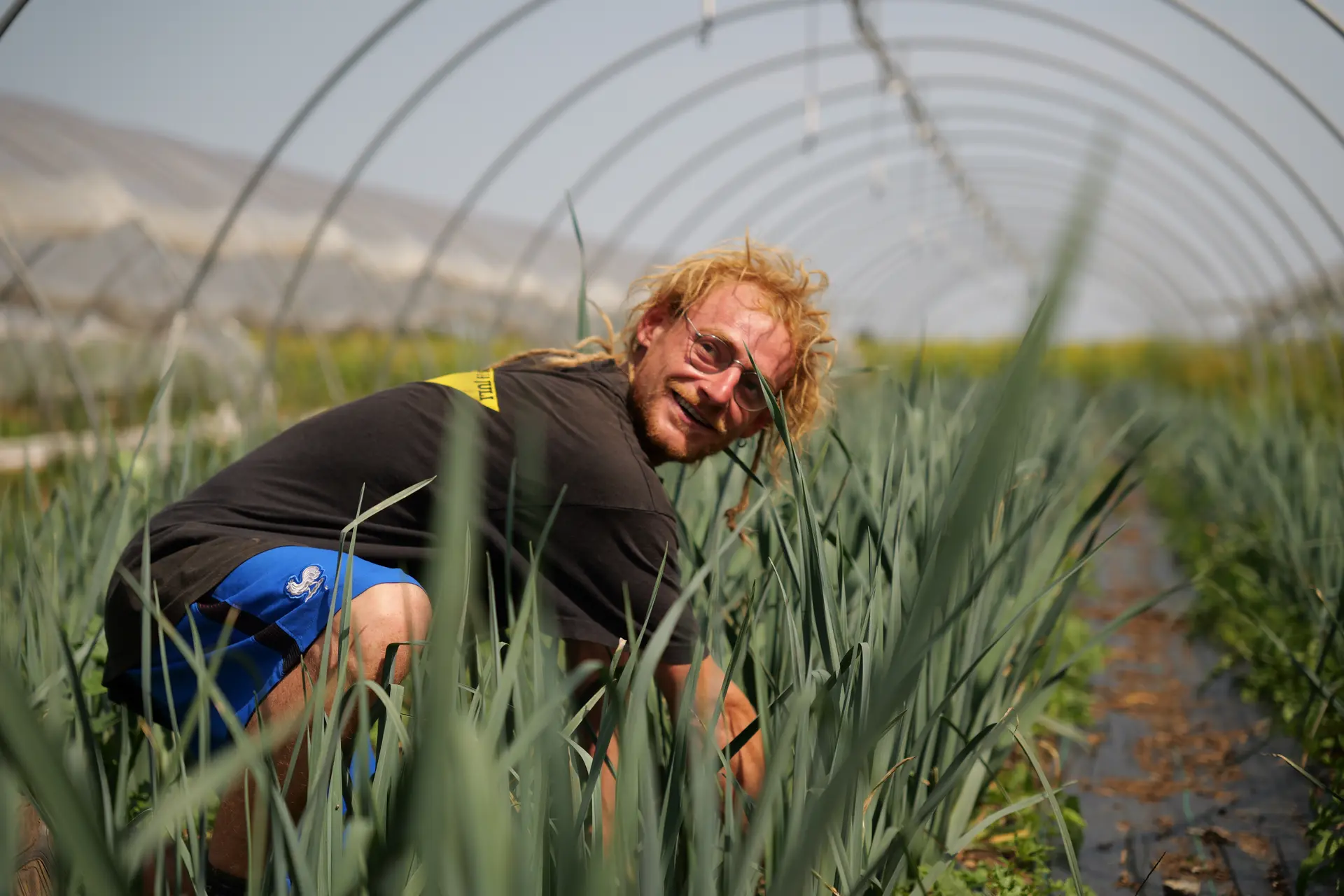
Market gardeners put it to the test: first feedback from the field
November 2024. After months of development, a first symbolic milestone is approaching. The PermaTechnics application is about to pass into the hands of the people it was designed for.
First steps, between discovery and learning
Testing starts on 18 November. Seven market gardeners agree to spend time exploring the tool. The team watches from a distance, by video call. Nicolas guides, Morgan takes notes.
The profiles vary: Fanny, a market gardener for 15 years. Milan and his partner Laura, recently set up on a micro-farm. Other growers of diversified vegetables, each with their own practices, habits and expectations.
The first few minutes say a lot. Hesitant clicks, steps retraced, questions. Normal. The interface is new, the reflexes still have to be built.
What the field teaches
Technical bugs appear, unavoidable at this stage. But beyond the immediate frustrations, the testers’ feedback converges on the essentials. The application is genuinely useful, it answers a real need.
Seen that way, some of the feedback already has value. One telling example: several market gardeners would like their seed requirements calculated automatically from the plantings they have set. A gap that looks obvious once it is pointed out.
Other comments widen the perspective. “Is it possible to have a paper version?” The team had not thought of it from that angle. In the field, with soil on your hands, paper can certainly be useful.
Measuring the road ahead
The tests reveal how much ground is left to cover. The application works, but it still needs work to become the smooth and intuitive tool everyone wants.
Even so, something important emerges. The market gardeners can see the potential. The overall view the tool could give them: “Having everything in front of you is reassuring.” Others appreciate the structure on offer, even if the execution still needs polishing.
Those tests were a key stage. Frustrating at times, rich in lessons. They feed both the technical development and the vision of the project. The team gets a better grasp of the real needs and of the priorities to set.
In January 2025, armed with those lessons, the team will meet in Lille to turn scattered feedback into a structured roadmap.
The first tests confirmed the initial intuition while measuring the road ahead. Between technical frustrations and a shared vision, they laid the foundations the project needed.
Coming next: how do you turn user feedback into clear priorities in the roadmap?